
Blog / Getting Paid
Invoice Payment Terms Explained: Net 30, Due on Receipt
Invoice payment terms explained: what Net 30, due on receipt, 2/10 Net 30 and EOM mean, which terms suit contractors, and how to word them clearly.

"Net 30." "Due on receipt." "2/10 Net 30." Payment terms are a few words at the bottom of an invoice, but they decide when you get paid and what happens if you don't. Pick the wrong terms, or word them vaguely, and a customer can stretch a two-week payment into two months without technically doing anything wrong.
This guide explains the most common invoice payment terms, what each one means, which ones fit contractors and small businesses, and how to word them so they're impossible to misread.
What are invoice payment terms?
Payment terms are the conditions you set for when and how an invoice gets paid. They typically cover:
- When payment is due (on receipt, in a set number of days, or on a set date)
- How the customer can pay (check, cash, bank transfer, card through your own processor)
- Any discount for early payment
- Any late fee or interest for paying after the due date
- Deposit or milestone requirements on larger jobs
The best time to agree on terms is before the job, on the quote or contract. The invoice then confirms what's already agreed.
Common payment terms, explained
| Term | What it means |
|---|---|
| Due on receipt | Payment is due as soon as the customer receives the invoice. |
| Due on completion | Payment is due when the work is finished, usually before you leave the site. |
| Net 7 / Net 15 | Payment is due 7 or 15 days after the invoice date. |
| Net 30 | Payment is due 30 days after the invoice date. Common in business-to-business work. |
| Net 60 / Net 90 | Longer terms, often requested by large commercial customers. |
| EOM | End of month: payment is due at the end of the month the invoice is issued. |
| Net 10 EOM | Due 10 days after the end of the month the invoice is issued. |
| 2/10 Net 30 | Customer can take a 2% discount by paying within 10 days; otherwise the full amount is due in 30 days. |
| CIA / CWO | Cash in advance / cash with order: payment before work or delivery. |
| 50% upfront, 50% on completion | A split payment, common for projects with significant materials. |
"Net" just means the full (net) amount is due within that number of days. The clock usually starts on the invoice date, so send the invoice promptly.
Net 30 vs. due on receipt: which should you use?
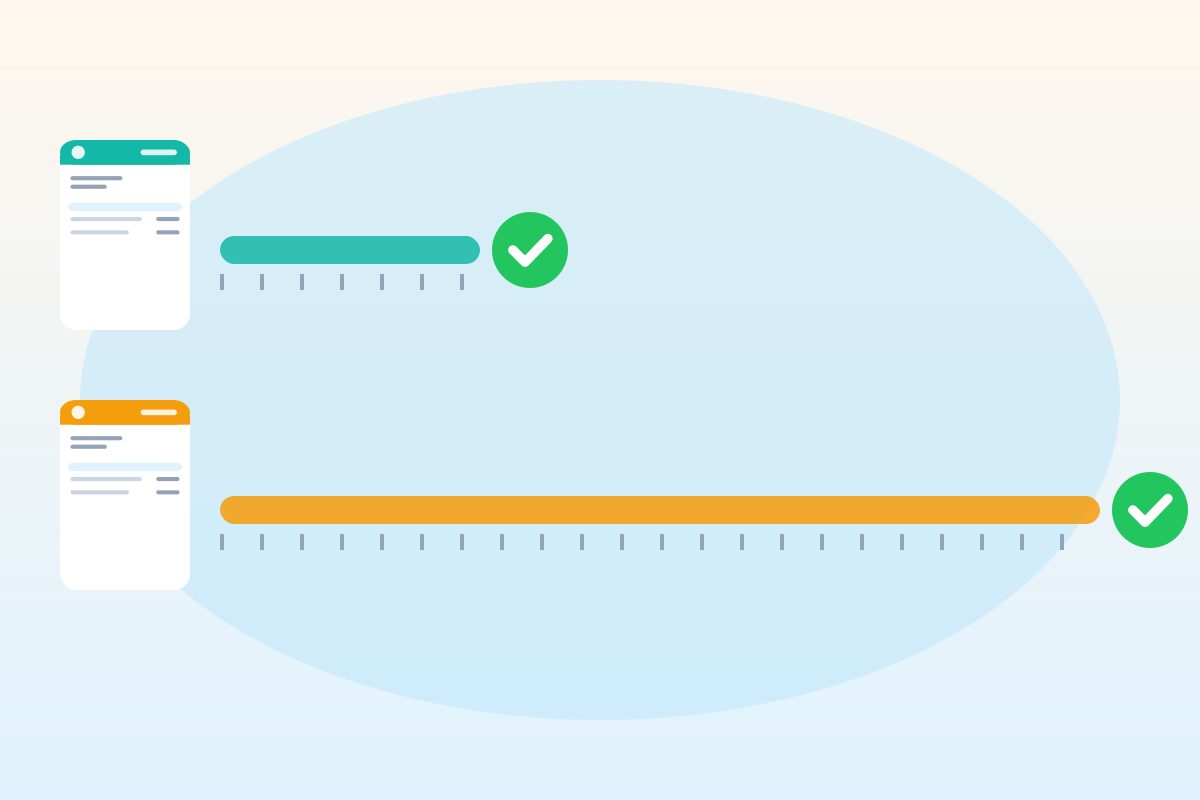
Due on receipt suits most residential work. Homeowners don't run accounts payable departments; they pay when the bill arrives or not at all. Service calls, repairs, and small jobs should usually be due on receipt or on completion.
Net 30 suits commercial customers, property managers, and general contractors who pay through an approval process. Many of them can't pay faster, even if they want to. Ask up front what they need on the invoice (purchase order number, W-9, lien waiver) so your invoice isn't rejected and the clock doesn't restart.
Net 7 or Net 15 is a good middle ground for larger residential jobs or repeat customers who need a few days.
A simple rule: use the shortest terms the customer can realistically meet. If you have to offer Net 30 to win commercial work, build that wait into your cash flow planning. The SBA's guide to managing your finances covers cash-flow basics.
Always write a real due date
"Net 30" makes the customer do math. "Due by June 14" doesn't. Put both:
Terms: Net 30 · Due date: June 14
That one change removes the most common excuse for late payment ("I thought it was due later").
Your invoices should show terms and a due date every time. SnipInvoice puts your payment terms and due date on each invoice it drafts, whether you type the job or describe it out loud, and flags anything it's unsure of instead of guessing. See how it works.
Early payment discounts
Terms like 2/10 Net 30 reward fast payers. They're common with commercial customers who track discounts. For small contractors, consider the cost: a 2% discount on a $10,000 invoice is $200. It can be worth it if it brings the money in 20 days sooner, but it's not right for every business.
Late fees and interest
You can often charge a late fee or interest on overdue invoices, but only if:
- It was disclosed and agreed before the work, ideally in the signed quote or contract
- It's printed on the invoice
- It complies with your state's limits on interest and fees
State laws vary, and some limit how much interest you can charge or require specific disclosures. This is general information, not legal advice. Check your state's rules or ask an attorney before adding late fees.
For government work, the federal Prompt Payment Act generally requires federal agencies to pay interest on late payments to contractors, and many states have prompt-payment laws for public, and sometimes private, construction.
Example invoice with clear payment terms
All names, numbers, and prices below are fictional examples, not pricing guidance.
Example Mechanical Services (fictional) · 14 Sample Ln, Anytown, USA · License #EXAMPLE-M000
Bill to: Example Property Management (fictional), Attn: Accounts Payable · PO #: EX-5521
Site: Unit 4B, 300 Demo Plaza, Anytown, USA
Invoice #: 7034 · Date: May 15 · Terms: 2/10 Net 30 · Due: June 14
| Item | Qty | Rate (example) | Amount (example) |
|---|---|---|---|
| Labor: diagnose and repair rooftop unit, Unit 4B | 3 hrs | $110.00 | $330.00 |
| Contactor and capacitor | 1 | $145.00 | $145.00 |
| Service call | 1 | $95.00 | $95.00 |
| Subtotal | $570.00 | ||
| Sales tax on parts, example rate 8% | $11.60 | ||
| Total | $581.60 | ||
| If paid by May 25 (2% discount) | $569.97 |
Example only. Taxability depends on your state.
Payment terms: 2% discount if paid by May 25; otherwise full amount due by June 14. Check payable to Example Mechanical Services or bank transfer. A late fee of 1.5% per month applies to balances past due, as agreed in our service agreement dated Jan 10, subject to state limits.
How to word payment terms on an invoice
Clear, short, specific. Some example wording you can adapt:
- "Payment due on receipt. Thank you for your business."
- "Terms: Net 15. Payment due by March 29."
- "50% deposit received. Remaining balance due on completion."
- "Terms: Net 30 from invoice date. Please reference invoice #7034 with payment."
Payment terms for deposits and big jobs
On larger jobs, terms often include a deposit and progress payments, not just one due date. See Progress Billing for Contractors for how to structure them, and Retainage in Construction if your customer holds back a percentage until completion. Some states cap deposits on home improvement contracts, so check before setting a policy.
FAQ
What does Net 30 mean on an invoice?
The full amount is due within 30 days of the invoice date. Writing the actual due date next to it avoids confusion.
What does due on receipt mean?
Payment is due as soon as the customer receives the invoice. In practice, most customers pay within a few days.
What are the best payment terms for contractors?
For residential work, due on receipt or on completion is common. For commercial customers, Net 30 is typical. Use the shortest terms your customer can realistically meet.
What does 2/10 Net 30 mean?
The customer can take a 2% discount by paying within 10 days. Otherwise, the full amount is due in 30 days.
Can I change payment terms after the job?
Not without the customer's agreement. Terms should be set on the quote or contract before work starts.
Can I charge interest on late invoices?
Often yes, if disclosed in advance and within your state's limits. Check local rules (not legal advice).
Set terms once, then put them on every invoice
The right payment terms are short, agreed in advance, and printed on every invoice with a real date. Get those three things right and most payment delays disappear. To get your terms, due date, and line items onto an invoice in a couple of minutes, try SnipInvoice. Quotes are free, and the Free plan includes 3 invoices a month.
Keep reading
Getting Paid
Retainage in Construction: How to Invoice & Get It Back
Retainage in construction explained: typical percentages, how to show retainage on progress invoices, how to bill its release, and how to get paid faster.
Getting Paid
What Is a Lien Waiver? 4 Types Contractors Should Know
What is a lien waiver? Learn the four types, conditional vs unconditional, when to sign each, and how lien waivers fit with your progress invoices.